The Elevation Project
UPF Ratings Explained: What UPF 50+ Means on a Shirt
November 20, 2026 · Easy Day
UPF is printed on a lot of outdoor clothing and explained on very little of it. Here is what the number means, what it does not mean, and how to use it when you buy a sun protective hoodie or shirt.
What UPF measures
UPF stands for ultraviolet protection factor. It describes how much UV radiation passes through a fabric. A fabric rated UPF 50 lets through about one fiftieth of the UV that reaches it, which is 2 percent. The rating covers both UVA and UVB.
How the numbers compare
| Rating | UV blocked | UV let through |
|---|---|---|
| UPF 15 | about 93 percent | about 1 part in 15 |
| UPF 30 | about 97 percent | about 1 part in 30 |
| UPF 50 | 98 percent | 1 part in 50 |
| UPF 50+ | at least 98 percent | less than 1 part in 50 |
UPF 50+ is the highest label in common use. The step from 30 to 50 looks small in percent blocked, but it cuts the UV that gets through by about 40 percent.
UPF is not SPF
- SPF is for sunscreen. It is measured on skin and mainly describes UVB, the rays that burn.
- UPF is for fabric. It is measured on the material and covers UVA and UVB.
The practical difference is that sunscreen has to be put on evenly and put on again. A shirt does not sweat off or get missed, as long as it covers the skin.
What gives a fabric its rating
- How tight the knit or weave is. Fewer gaps let less light through. This is the biggest factor.
- The fiber. Polyester and nylon tend to block more UV than untreated cotton of the same weight.
- The color. Darker and more saturated colors usually absorb more UV than pale ones.
- Finishes. Some fabrics get part of their rating from a UV absorbing treatment on the surface.
What changes protection after you buy it
- Stretch. A shirt pulled tight across the shoulders opens the knit. A relaxed fit protects better than a tight one.
- Water. Many fabrics, cotton especially, let more UV through when wet.
- Wear. Thin, faded or worn fabric blocks less than it did new.
- Washing. A rating that depends on a surface finish can drop as the finish washes out. A rating that comes from the knit has nothing to wash out.
Coverage still decides it
A rating only applies to the skin under the fabric. The neck, ears and hands are where most people burn in a long sleeve shirt. That is the case for a hood and for thumbholes, and for sunscreen on whatever is still showing.
How to use the number when you shop
- Look for a stated rating. No number means no claim.
- Choose UPF 50+ for long days outside.
- Ask whether the rating comes from the fabric or a finish.
- Check the coverage: sleeves, hood, hands.
- Buy a size that does not stretch tight.
Our shirt, for reference
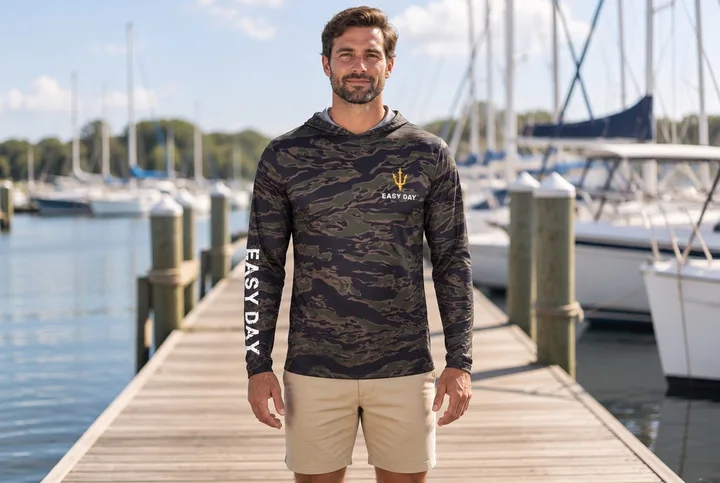
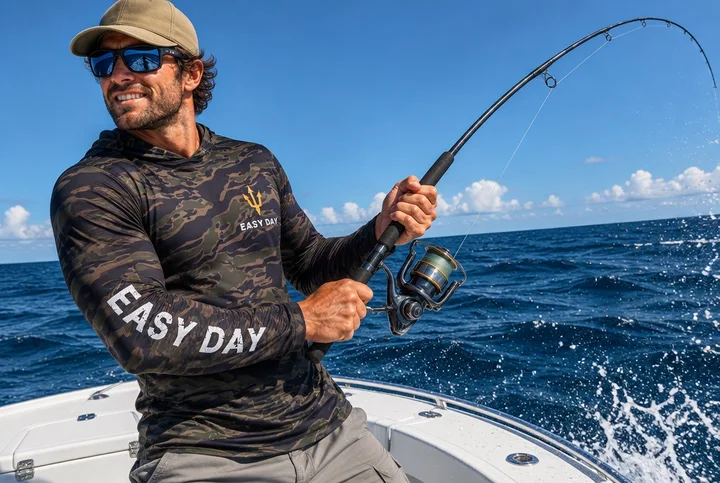
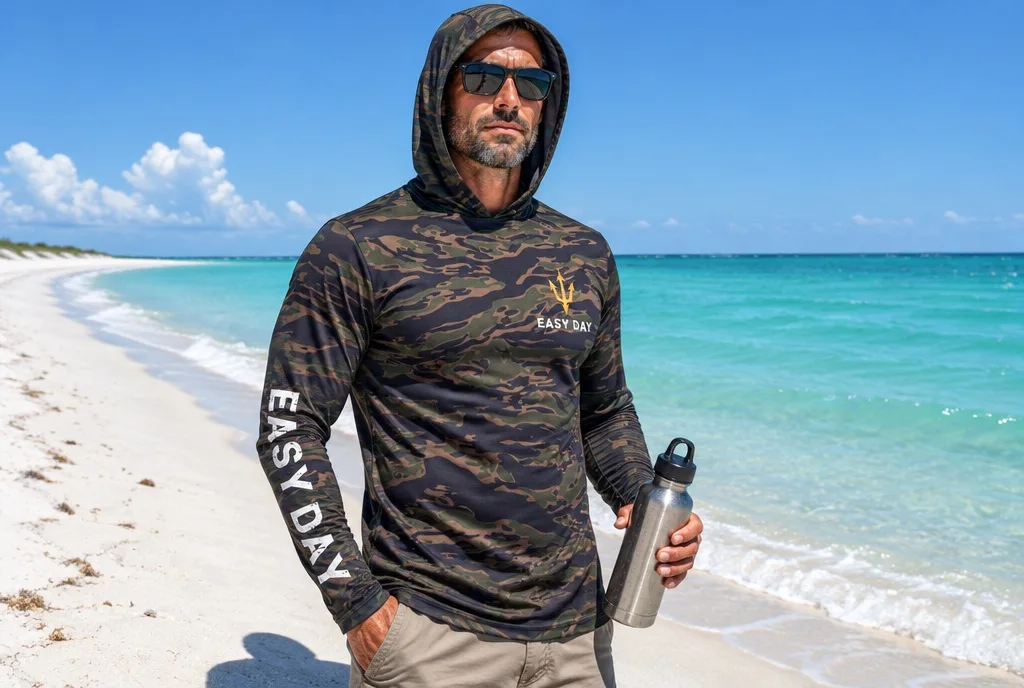
The Tiger Stripe UPF Hooded Shirt is rated UPF 50+, and the protection comes from the 90/10 polyester spandex knit, not a coating. It has a hood and thumbholes, a relaxed unisex fit in S to 3XL, and costs $62.00. Measurements are in the UPF hoodie size guide.
For what else to weigh, read Best Sun Hoodies: the four things that decide it.